My story

I learned to think in systems
I trained as an architect, orchestrating the invisible complexity that makes spaces work. Structure, flow, materials, people. Everything had to come together seamlessly, or it failed.
That discipline stuck: make the hard work invisible so the experience feels effortless.
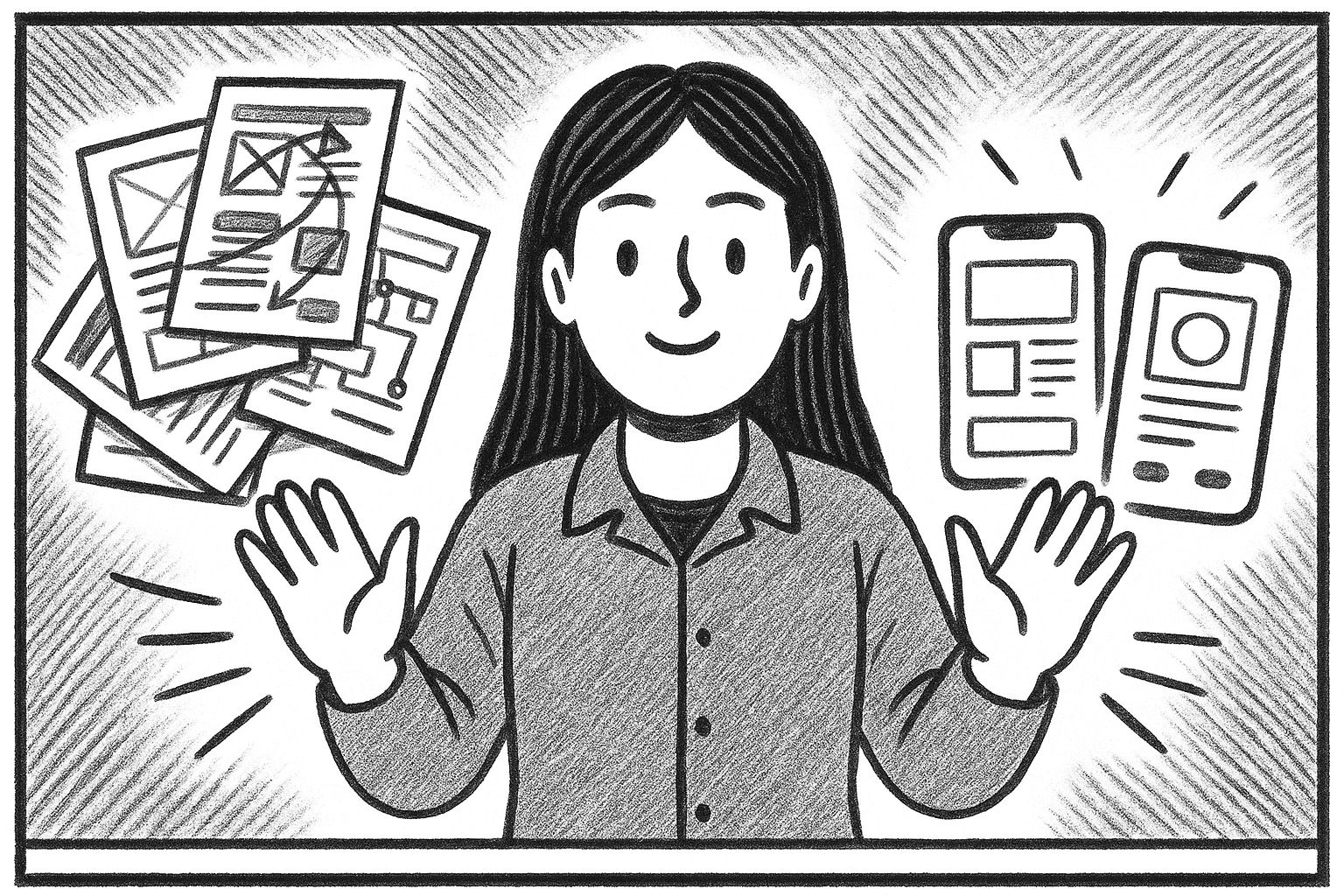
The same discipline,
different canvas
The best apps feel simple. But behind them? Chaos. Multiple user types, business constraints, technical limitations, competing stakeholder opinions.
I realised I could bring the same discipline to digital products. Make the hard parts invisible so users just get it.

How I approach problems
I start by listening. User interviews, shadowing support calls, digging into data. I need to understand the real problem before I touch Figma.
Then I prototype fast and test faster. Low fidelity first, get feedback early, and iterate based on what actually works. I'd rather be wrong quickly than right slowly. And I bring everyone along: PMs, engineers, and stakeholders.
Good design happens in conversation, not in isolation.

What keeps me going
I love when something clicks. When a user says, "Oh, that makes sense now."
When a junior designer ships their first feature.
When complexity becomes simple.
I thrive in the messy problems.
But what really drives me?
Solving real problems that actually matter to people. That's the work I care about.
My process & tools
I start by listening - user interviews, data, support calls. Then I prototype fast and test faster. I'd rather be wrong quickly than right slowly.

My everyday toolkit